
Sea Lice: What Does Sea Lice Look Like? Life Cycle, And Origin
What Does Sea Lice Look Like and How Do They Spread?
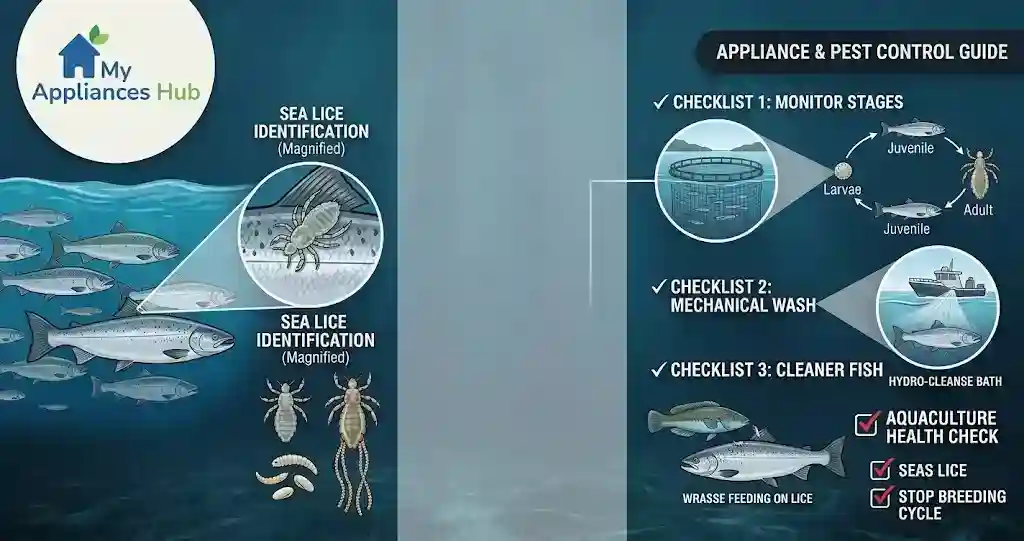
Sea lice are tiny, semi-transparent parasitic cope-pods featuring flattened, oval-shaped bodies, tough exoskeletons, and underside legs used to cling to host fish. Measuring just a few millimeters, they feed on fish skin, mucus, and blood. Their life cycle moves from eggs laid on fish scales to free-swimming larvae, progressing into attached juveniles and breeding adults. Infestations primarily affect wild and farmed salmon, managed through cleaner fish (wrasse), mechanical washing, and targeted treatments.
While their name often conjures images of beach pests, sea lice are actual marine ectoparasites that pose serious challenges to oceanic ecosystems and commercial aquaculture. These tiny, translucent crustaceans attach themselves to the skin, fins, and gills of marine fish—most notably wild and farmed salmon—feeding on surface tissue, mucus, and blood. Left unmanaged, severe sea lice infestations weaken fish, reduce growth rates, and increase susceptibility to secondary infections.
This comprehensive diagnostic guide clarifies what sea lice look like under magnification, details their multi-stage life cycle, outlines their ecological origins, and explains how marine managers differentiate sea lice from coastal pests like sand fleas and sea itch.
Do you know what sea lice look like? Have you ever heard of them? Small parasitic crustaceans called sea lice (also known as Sea louse), infest the skin of fish and can seriously affect fish populations, especially those of farmed salmon. In this article, we’ll examine the physical characteristics of sea beach lice and how they differ from other marine parasites.
But first, let’s clarify what sea lice are. The tiny, transparent sea lice live on the blood and mucus of the fish they attach to and are known as. With only a few millimeters in length, they are frequently hardly discernible to the unaided eye. Sea lice, despite their tiny size, can have a significant effect on fish populations, particularly on farmed salmon, which are particularly vulnerable to infestations. Because of this, it’s crucial to know how to spot sea lice and how to limit their influence on fish populations.
Related Article
What is Sea Lice? What Does Sea Lice Look Like?
What is a Sea Lice?
- Small parasitic crustaceans called sea lic to infest the skin of fish.
- They can seriously affect fish populations, especially those of farmed salmon.
What Does Sea Lice Look Like?
- Sea lice are tiny, translucent animals with oval, flattened bodies. They have numerous pairs of legs on the underside and two antennae on the head.
- Though certain species may be slightly reddish or brownish, the majority of species are clear or pale in appearance.
- Having a tough exoskeleton, Sea louse.
- Species with unusual patterns or long, slender antennae can be recognized.
- With only a few millimeters in length, they are frequently hardly detectable to the human eye.
How to Identify Sea Lice
- Because of their tiny size and transparent appearance, sea lice are frequently challenging to see.
- They are distinguishable by their antennae and flattened oval-shaped bodies.
- Some species can be identified by their unusual patterns or long, slender antennae.
- Due to the similarities in appearance among many species, it can be challenging to distinguish sea lice at the species level.
Sea Lice Life Cycle
Fish skin is home to parasitic creatures called sea lice. They go through a long life cycle with various developmental stages:
Egg Production
On fish skin, female sea lice lay their eggs. Typically, these eggs are fastened to the host fish’s fins or scales.
Larval Development
The larvae that emerge from the eggs are tiny and transparent. These larvae cling to the host fish’s skin and start consuming its blood and tissues.
Juvenile And Adult Stages
The larvae gradually molt into juvenile sea lice as they mature and expand. These young sea lice keep eating the host fish and develop into adults.
Reproduction
Lekking is the term for the process through which male and female adult sea lic assemble to mate. The cycle is restarted when the females deposit eggs, which develop into new larvae.
Pictures of Sea Lice


The Origin of Sea Lice
Where do sea lice come from? The parasites known as copepods, which infest the skin of a variety of marine creatures like fish, whales, and dolphins, are assumed to be the ancestors of sea lice. Although the precise evolution of sea lice is not fully known, it is thought that they have existed for millions of years.
All maritime areas around the world harbor sea lice, albeit some species, are more prevalent there than others. Since they are drawn to the higher concentration of host fish in places with high levels of water pollution, this is where they are most frequently found. Sea lice are frequently discovered in places with a lot of human activity, such as close to fishing ports and coastal villages. Overall, there is a wide range of maritime environments where sea lice can be found.
Video – What Are Sea Lice?
⏱ Video Key Moments & Medical Summary
- 0:00 What Are Sea Lice? Explanation that sea lice are actually tiny baby jellyfish the size of a pepper grain that sting when trapped under swimwear.
- 0:16 Symptoms & Rash Appearance Itching and stinging starting 4 to 24 hours later, producing an acne-like red rash lasting about a week.
- 0:29 How to Avoid & Prevent Sea Lice Stings Tips on swimwear, changing immediately, showering without a suit (as freshwater releases venom), and laundering clothes.
- 0:56 Treatment & When to See a Doctor Using antihistamines or creams for itch relief, and warning signs requiring a doctor’s visit (nausea, fever, headaches, spasms).

Conclusion: What Does Sea Lice Look Like, Life Cycle, And Origin.
In conclusion, sea lice are tiny parasitic crustaceans that live on fish skin and can seriously impair fish populations. They are believed to have developed from copepods and have a complicated life cycle with multiple developmental phases. To manage and reduce the impact of sea lice on fish populations, it is crucial to comprehend the sea lice biology and behavior. A critical step in this procedure is comprehending what sea lice are and how they appear. We can improve our methods for reducing their numbers and having less of an impact on fish populations by researching these parasites and knowing more about their biology.
⏱ Video Key Moments & Summary
- 0:00 What is a Sea Louse? Introduction to ocean parasites that latch onto fish to consume skin, blood, and mucus.
- 0:07 Human Bites and Rashes How sea lice occasionally mistake humans for prey, resulting in painful rashes and infestations.
- 0:14 Invisible Threat in the Water The hidden nature of sea lice in the ocean and concluding wild facts.